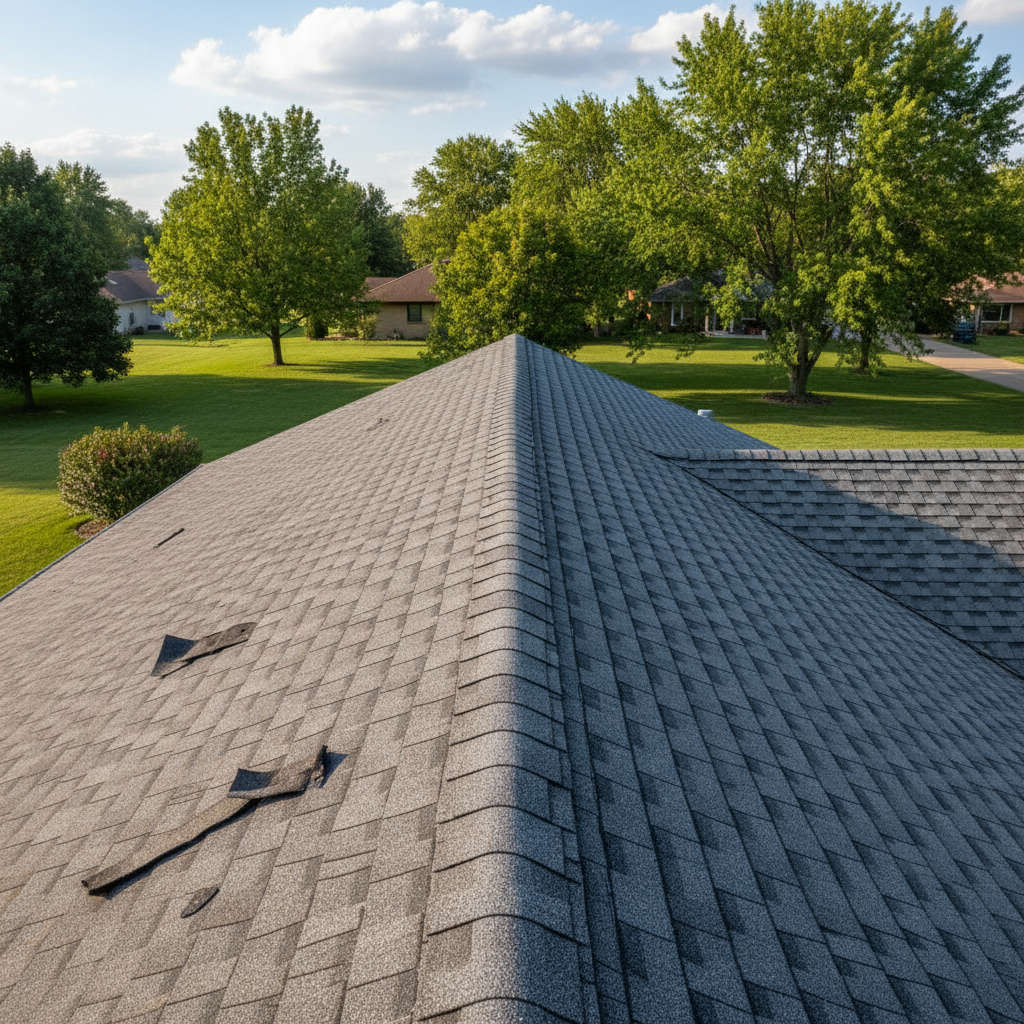
Hail slams into a roof in Charleston Park or near Offutt Air Base, and suddenly you are staring up at bruised shingles and wondering what to do next. Most homeowners find themselves torn between two choices after a severe weather event: patch up the damaged spots or rip the whole thing off and start fresh. Paradise Roofing Company breaks down how these two approaches actually stack up against each other right here in Nebraska.
The Reality of Spot Repairs
Fixing just the damaged areas sounds great for the wallet initially. You call a crew out, they swap out a bundle of bruised shingles on the windward slope, and you go on with your life. The upfront cost is low, usually just matching your insurance deductible or a few hundred dollars out of pocket if the damage is minor.
The catch? Nebraska weather is brutal. If your roof has taken a beating from golf-ball-sized hail, the older shingles surrounding those patched areas are already compromised, brittle, and losing granules. A spot repair fixes the immediate leak threat, but it leaves you vulnerable to the next big thunderstorm rolling across the plains. Plus, mismatched shingle colors can stick out if your existing roof has faded under the relentless summer sun.
When a Full Replacement Wins
Tearing off the old material and installing a brand new system is a bigger pill to swallow. It takes more time, costs more upfront, and involves a lot more noise in your driveway. Paradise Roofing Company often sees that homeowners who try to save money with continuous spot repairs end up spending more over five years than they would have on a single replacement.
A full replacement lets us address the decking, upgrade your underlayment to handle heavy moisture, and install impact-resistant shingles that stand up much better to future Bellevue hailstorms. You get a uniform appearance across your entire property and a brand-new manufacturer warranty that helps protect your home for years to come.
Cost, Durability, and Maintenance Compared
When you look at the numbers, spot repairs win on short-term affordability. You might spend $500 to $1,500 depending on the scale. A full replacement will run significantly more, though insurance often covers the bulk of it minus your deductible if storm damage is documented properly.
Durability is where the gap widens fast. A patch is only as good as the aging material around it. If the surrounding shingles are ten years old, a new patch won't stop them from failing next season. A complete system handles high winds and thermal shock much more reliably.
Maintenance requirements follow the same trend. Patches need regular check-ups to make sure the sealant holds up against our freezing winters and hot summers. A new roof essentially puts maintenance on autopilot for the first decade, aside from cleaning out your gutters.
Making the Right Call for Your Home
Look at the age and overall health of your roof before making a choice. If the roof is under five years old and took localized damage from a freak storm, a clean spot repair makes total sense. If your roof is past the ten-year mark and showing widespread granule loss, stop throwing money after bad patches. Paradise Roofing Company provides Roof Replacement services for homes in Bellevue, Nebraska.