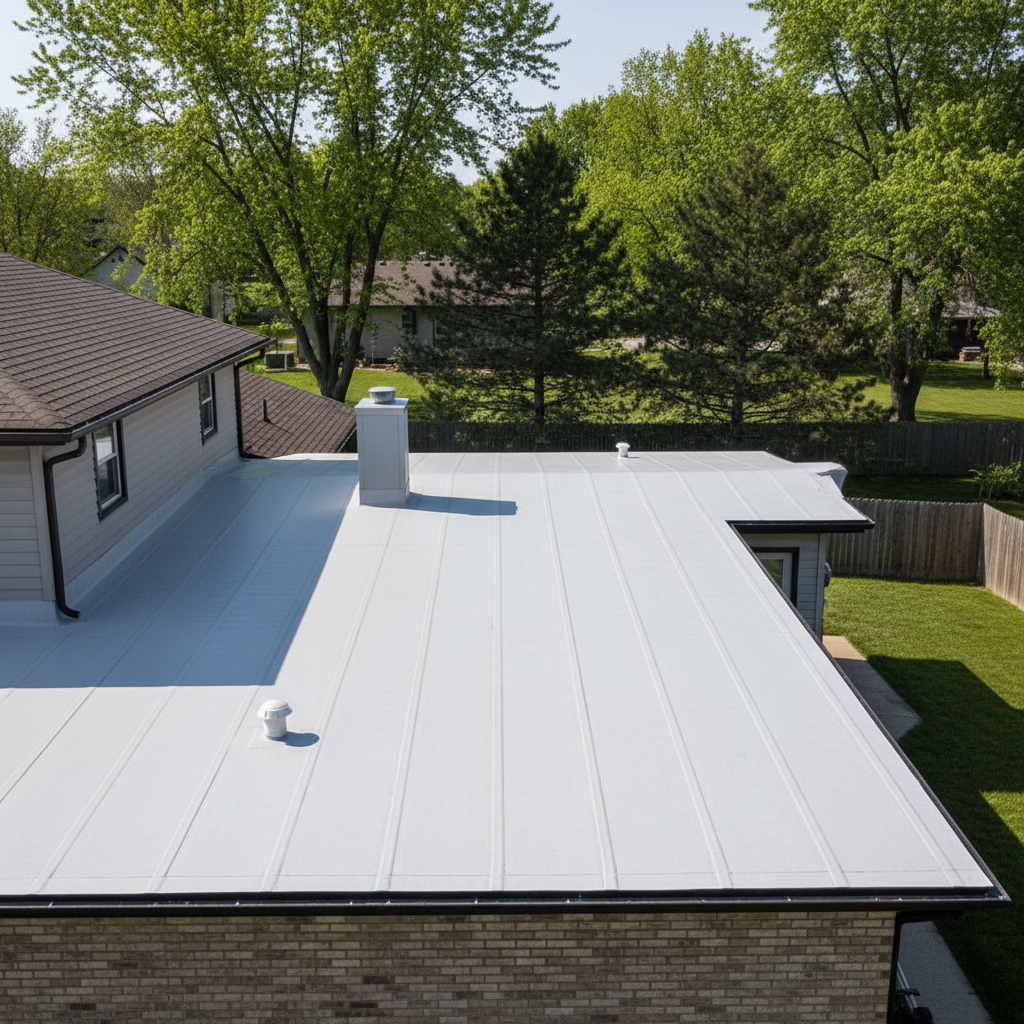
Property owners in Bellevue, NE often walk a flat roof around Sarpy County after a heavy spring storm and notice pools of water sitting there like small lakes. When planning a commercial TPO roofing project for a building in Bellevue, ignoring drainage is a costly trap. Paradise Roofing Company has seen plenty of local property owners rush into commercial jobs and make avoidable mistakes that lead to premature leaks, failed inspections, and massive repair bills down the road. Property owners need to watch out for these issues to make sure they do not regret their contractor choice.
Going Solely With the Lowest Bidder
Everyone wants to save money, but picking a commercial roofing contractor purely because they came in thousands of dollars lower than competitors is a recipe for disaster. TPO is a single-ply membrane that relies heavily on precise installation techniques, particularly around hot-air welded seams. Cheap bids usually mean cutting corners on material thickness, skimping on insulation layers, or hiring inexperienced labor who do not know how to handle local Nebraska weather shifts. If the price looks too good to be true, you are likely paying for a sub-par installation that will fail the first time high winds hit the bluffs.
Ignoring Local Weather Demands and Material Thickness
Nebraska gets intense summer heat, UV radiation, and brutal winter freezes, along with severe hail storms. Not all TPO membranes are created equal. Choosing a thinner membrane like a 45-mil sheet instead of a solid 60-mil or 80-mil sheet to save a little upfront cash leaves a building completely vulnerable to punctures from wind-blown debris and hail. You have to match the material spec to regional climate realities, or you will be replacing the entire system way ahead of schedule.
Overlooking Seam Welding and Flashing Details
The integrity of a TPO roof lives or dies at the seams and the flashings around HVAC units, parapet walls, and roof hatches. A common shortcut undisciplined crews take is improper temperature calibration during automated heat-welding. If the weld is not bonded at a molecular level, the seams will eventually zipper open under thermal expansion. Always verify that a contractor crew is certified by the manufacturer and ask how they handle detail work around penetrations.
- Checking for proper substrate preparation before laying insulation
- Insisting on manufacturer-certified installation crews
- Refusing to accept shortcuts on perimeter flashing
Avoiding these pitfalls comes down to doing your homework before signing a contract. Take your time, vet your commercial contractors thoroughly, and make sure your TPO installation is done right the first time.